An exhibition about residues, resources, and the role of chemistry in a circular economy.
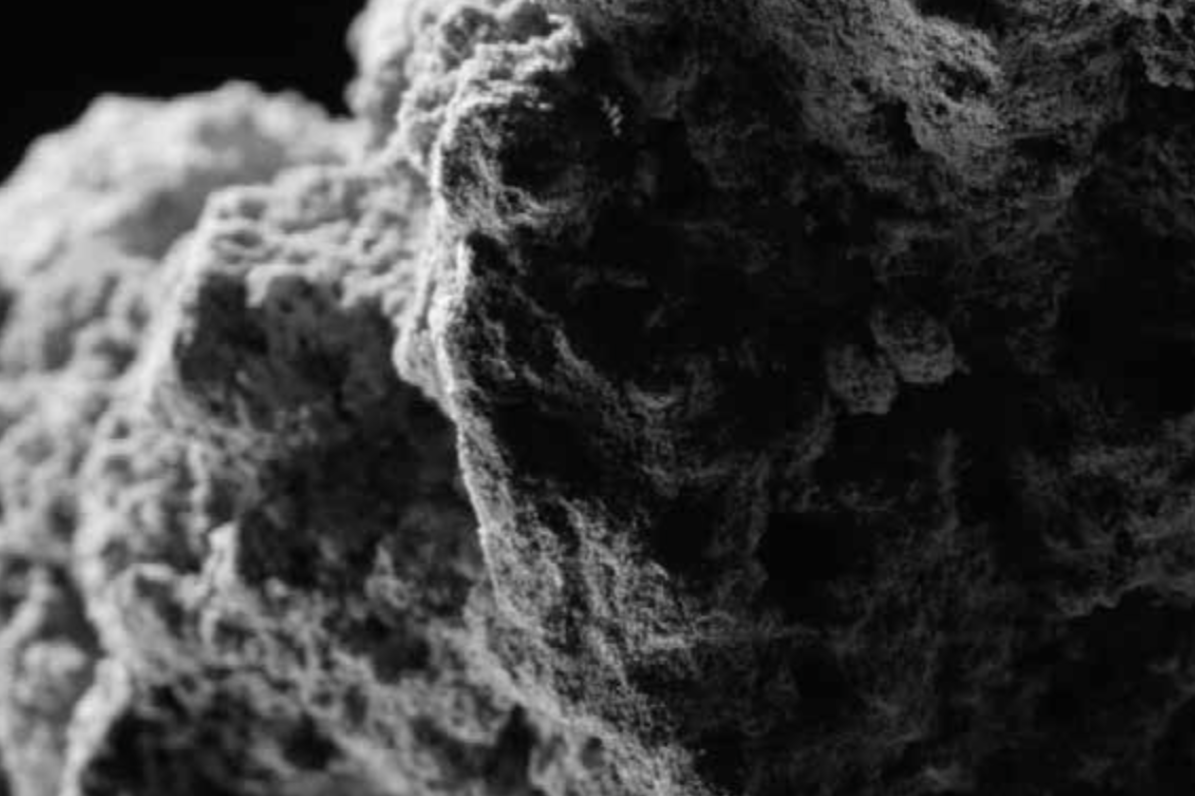
The artist collective TRANSFORMA approaches this material through a documentary–science-fiction perspective, juxtaposing the archaic with the technological.
WHAT IS SLAG?
Slag is not an endpoint, but a starting point. It forms during the incineration of municipal waste and consists of a complex mixture of mineral materials. Organic components are lost as gas—what remains is a chemically stable material that is far from insignificant.
In Berlin, hundreds of thousands of tons of waste are thermally treated each year. While the volume is drastically reduced, the materials do not disappear—they are transformed. Metals are recovered, mineral fractions can be used in construction, and other substances remain bound and require long-term management.
At its core is the question of how chemistry can enable a circular economy. Instead of treating materials as waste, their composition and properties are reconsidered. What is slag made of? What potential does it hold? And where are its limits?
The materials and projects presented in the exhibition show how residues can become resources—and how chemical innovation contributes to closing material cycles.
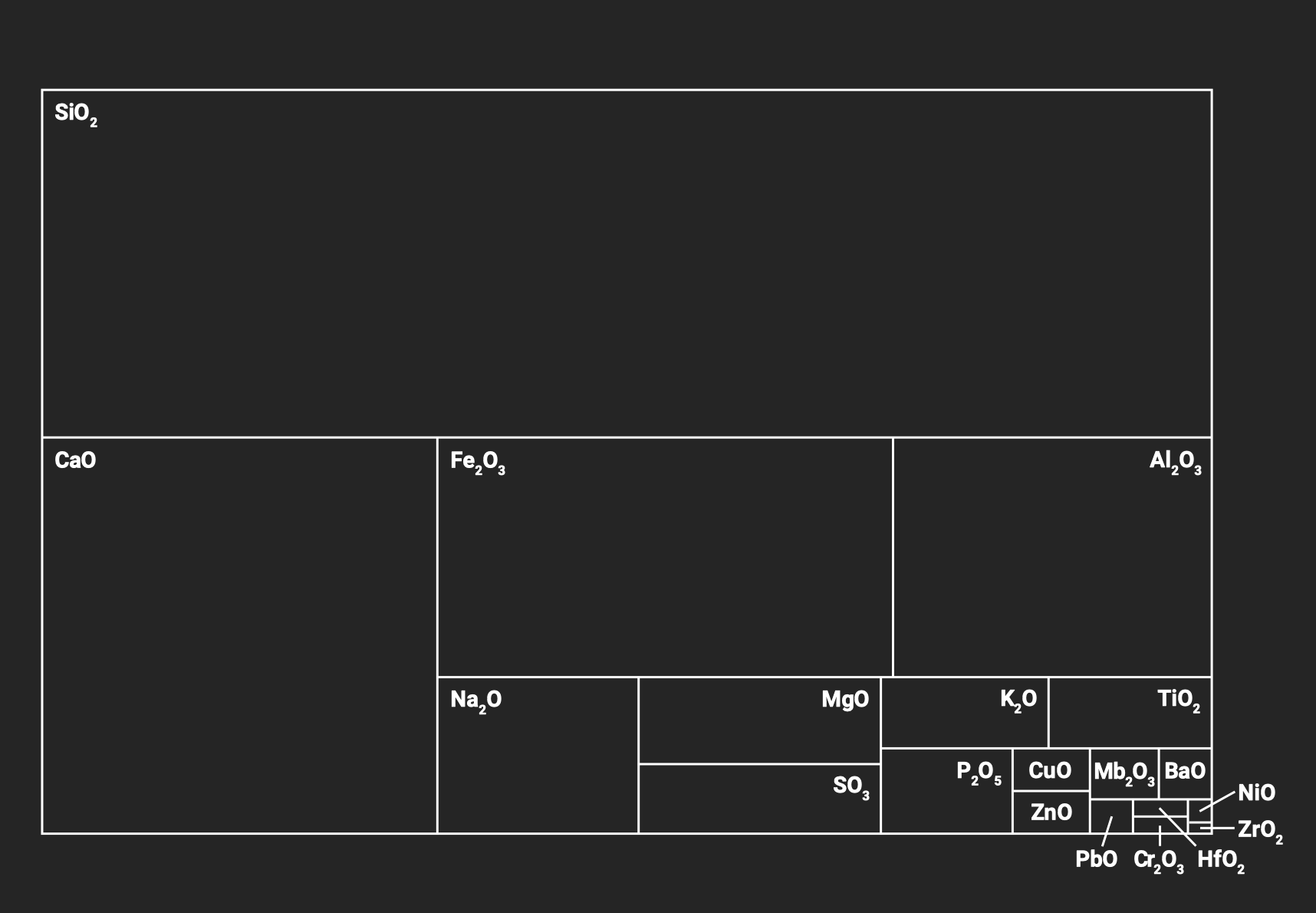
WHAT'S IN SLAG
WHAT'S IN SLAG
-
44.0% SILICIUM (SIO2)
Main component of sand, and glass. Is quartz when crystalline.
17.0% QUICKLIME (CAO)
Produced through heating of CaCo3 containing substances, e.g. shell, limestone rock. ~300 million tons per year produced for industry.
11.9% IRON(III) OXIDE (FE2O3)
'Rust’. Used in steel production or in welding arcs (thermite reaction).
8.4% ALUMINA (AL2O3)
When crystalline with trace impurities, you get ruby or Sapphires. Applications in catalysis, abrasives, electrical insulation.
3.9% SODIUM OXIDE (NA2O)
Used in glass manufacturing.
2.1% MAGNESIA (MGO)
Highly refractive (low electrical cond. / very high thermal cond.) fireproofing material.
1.6% SULFUR TRIOXIDE (SO3)
Has gaseous and solid forms. Forms sulfuric acid in contact with water.
1.3% TITANIA (TIO2)
This is E171, used as white colorant in foods. Also used in sun screen. Estimated use in 2/3 of all coloured pigments globally.
1.3% POTASSIUM OXIDE (K2O)
1.2% PHOSPOROUS PENTOXIDE (P2O5)
Strong dessicant (removes moisture).
0.4% COPPER(II) OXIDE (CUO)
Significant component of mined copper ore. Uses in pigments and as precursor to other Cu materials.
0.4% ZINC OXIDE (ZNO)
Popular industrial additive from rubber to cosmetics. Can be eaten as source of zinc.
0.3% MANGANESE OXIDE (MN2O3)
0.3% BARIUM OXIDE (BAO)
0.1% LEAD MONOXIDE (PBO)
Used in glass manufacturing.
0.1% HAFNIUM OXIDE (HFO2)
Used in electrical equipment. Has a melting point of ~2500 ºC.
0.1% CHROMIUM(III) OXIDE (CR2O3)
Used as green pigment in industry.
0.1% NICKEL OXIDE (NIO)
<0.1% ZIRCONIA (ZRO2)
Certain crystal forms are diamond simulators. Used where very hard, stable ceramics are needed. E.g. insulation, abrasives, enamels.
-
Chemistry is a powerful tool to realize sustainability and circularity. It is the science of reorganizing matter (materials and molecules) on an atomic scale.
-
When municipal waste, the contents of the black bin, is burned at ~800 ºC, for ~1 hr. What’s left behind is 'Schlacke'.
Municipal waste is burnt because of its abundance (~0.5 Tons produced per capita, EU 2023).
The alternative waste landfilling releases methane (CH4) a potent greenhouse gas, while waste incineration, reduces CH4 emissions, lessens waste volume and generates energy. However, it is not profitable and it releases huge CO2 emissions, and generates waste.
-
At BSR Ruhleben 580,000 tons of waste are processed annually, generating ~5% of Berlin’s household electricity. 1 ton of waste generates 2.5 tons of high pressure steam.
CIRCULAR INNOVATIONS
CIRCULAR INNOVATIONS
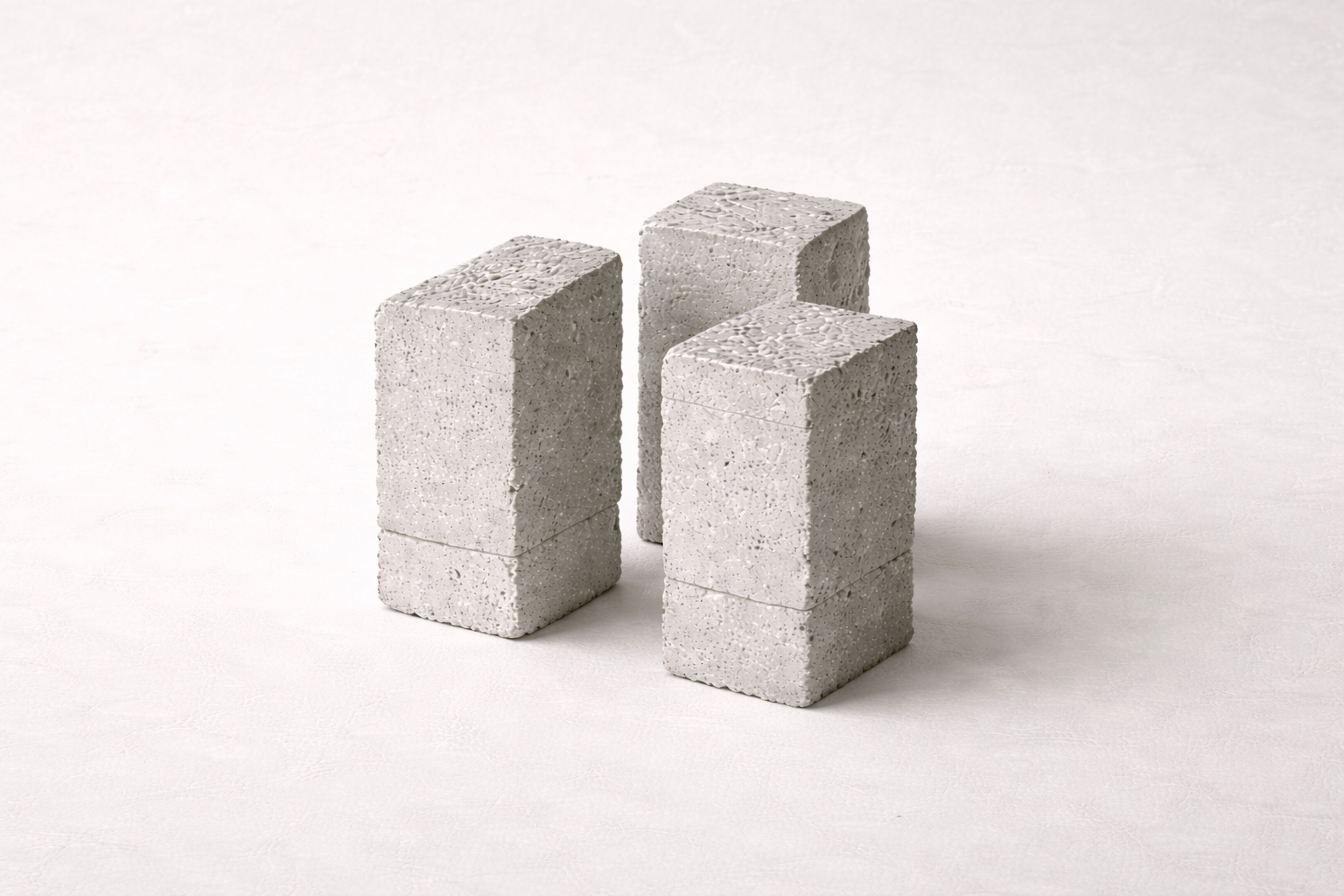
Kalz
Mineral construction materials from residues
Kalz develops processes to convert mineral waste streams, such as incineration slag, into new construction materials. These processes rely on mineral reactions that stabilize and transform inorganic components into usable building products.
Slag, typically considered a residual material, contains oxides of silicon, calcium, aluminum, and iron. Through controlled processing, these compounds can be re-integrated into cementitious systems, reducing the need for energy-intensive primary materials such as clinker.
In some approaches, mineral phases can also interact with CO₂, enabling long-term carbon binding within solid materials.
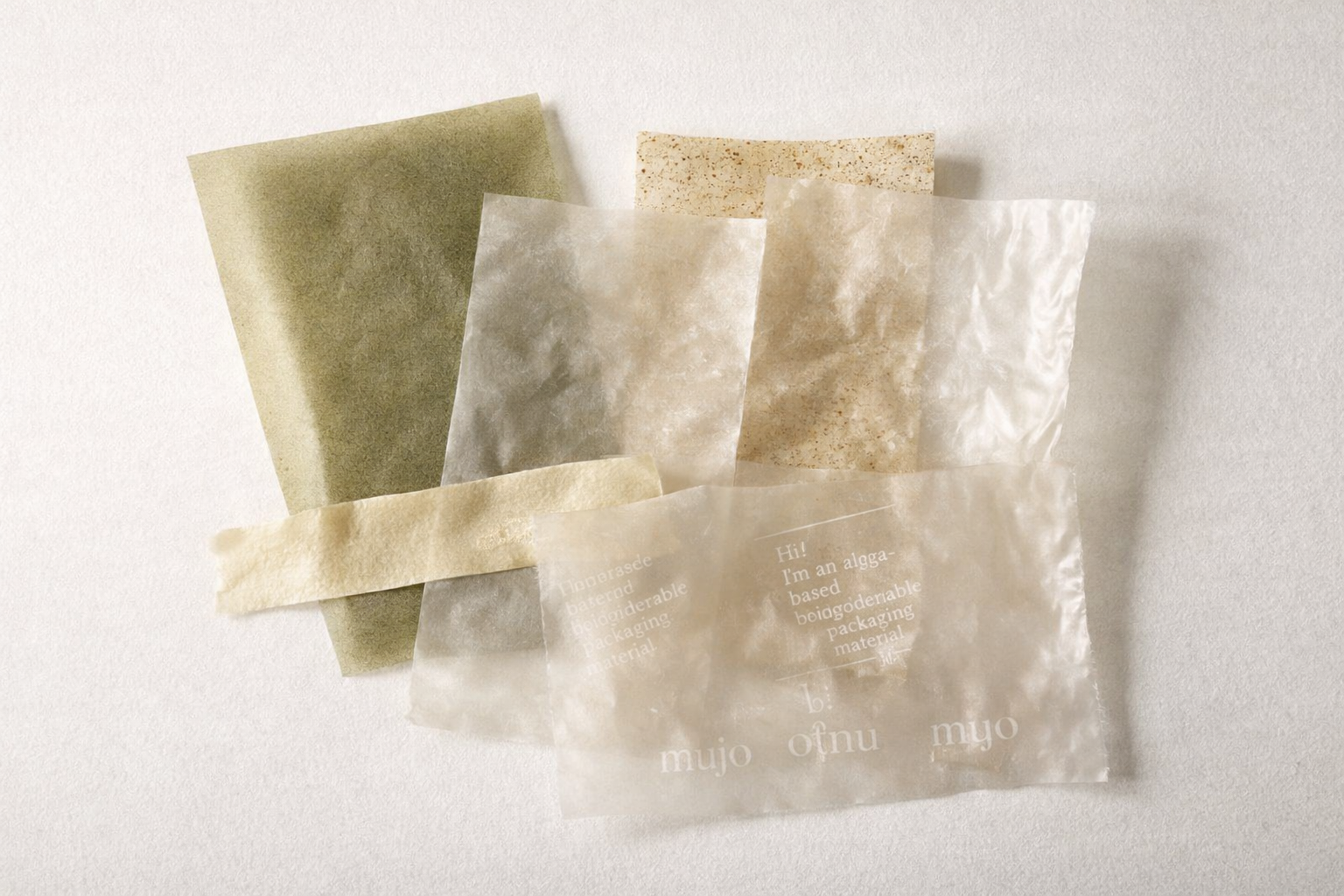
mujō
Algae-based packaging films made from alginate, natural plasticizer & mineral or organic fillers
mujo develops bio-based, compostable materials derived from seaweed as alternatives to fossil-based plastics used in short-life applications such as packaging.
The material is produced from algae, which grows rapidly without requiring freshwater, fertilizers, or agricultural land. Unlike conventional plastics, mujo films are designed to break down under natural conditions, reducing long-term environmental persistence and avoiding microplastic formation.
From a chemical perspective, these materials are based on biopolymers such as alginates, which form flexible, transparent films with tuneable properties.
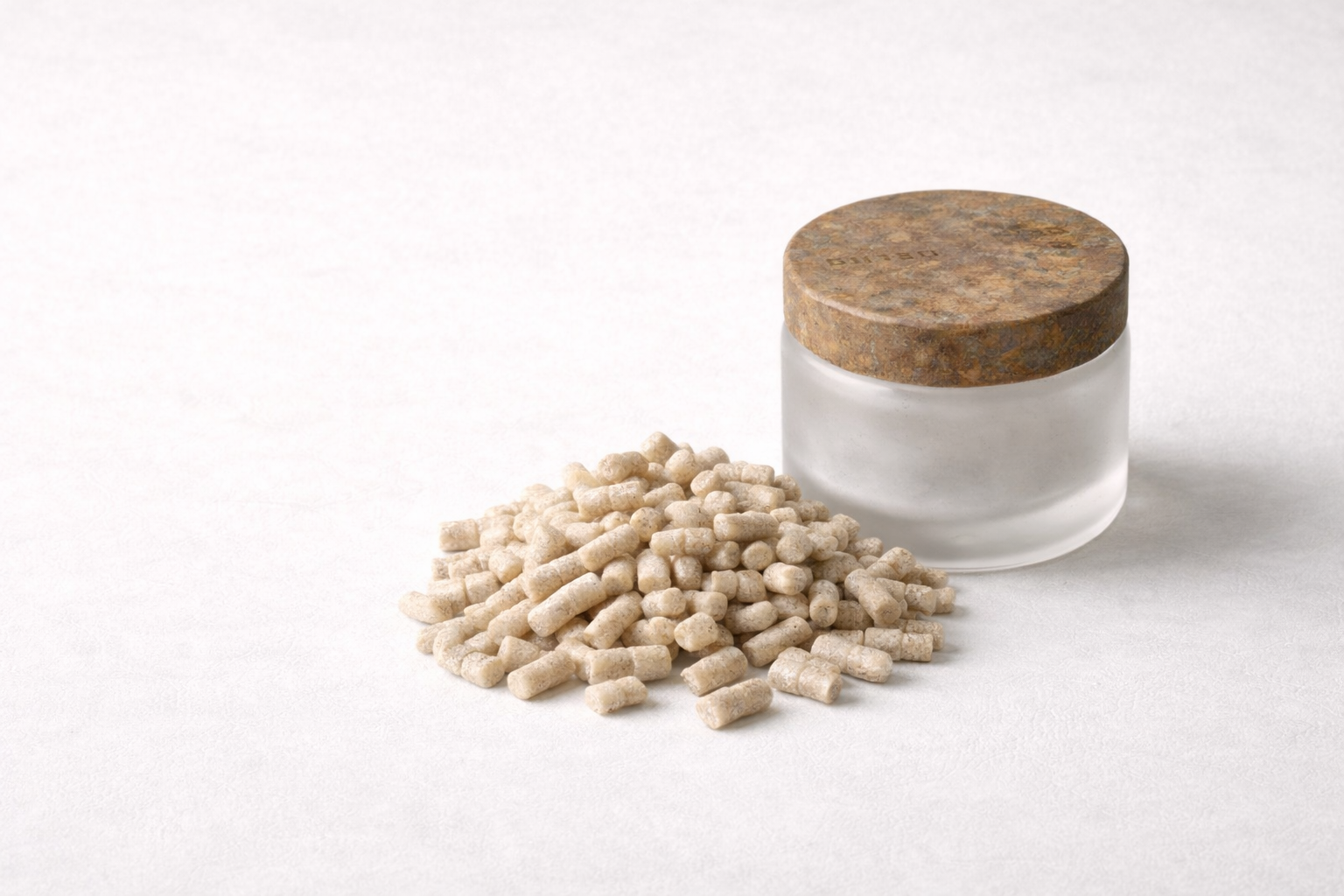
CIYANO
Bio-based functional materials
CIYANO develops bio-based functional materials and chemical building blocks using advanced chemical processes. Their work focuses on transforming renewable feedstocks into materials that can perform in industrial and commercial applications.
The pellets and formulations shown in the exhibition represent intermediate material states—not final products, but adaptable compounds that can be further processed into packaging or other functional materials.
CIYANO enables the production of materials with specific mechanical, thermal, or barrier properties, while reducing reliance on fossil-based inputs.

VISIT US
UNI_VERSUM
TUB Exhibition space
Straße des 17. Juni, 135
10623 Berlin
THIS EXHIBITION IS CURRENTLY CLOSED DUE TO BUILDING MAINTENANCE EFFORTS. NEW DATES TO BE PUBLISHED.
OPENING HOURS (Paused)
Mon-Fri
12:00M - 3:00PM
CREDITS
This project was created in collaboration with greenCHEM, Hybrid Plattform, Stabsstelle Science & Society of TU Berlin, and with the kind support of Berliner Stadtreinigung.